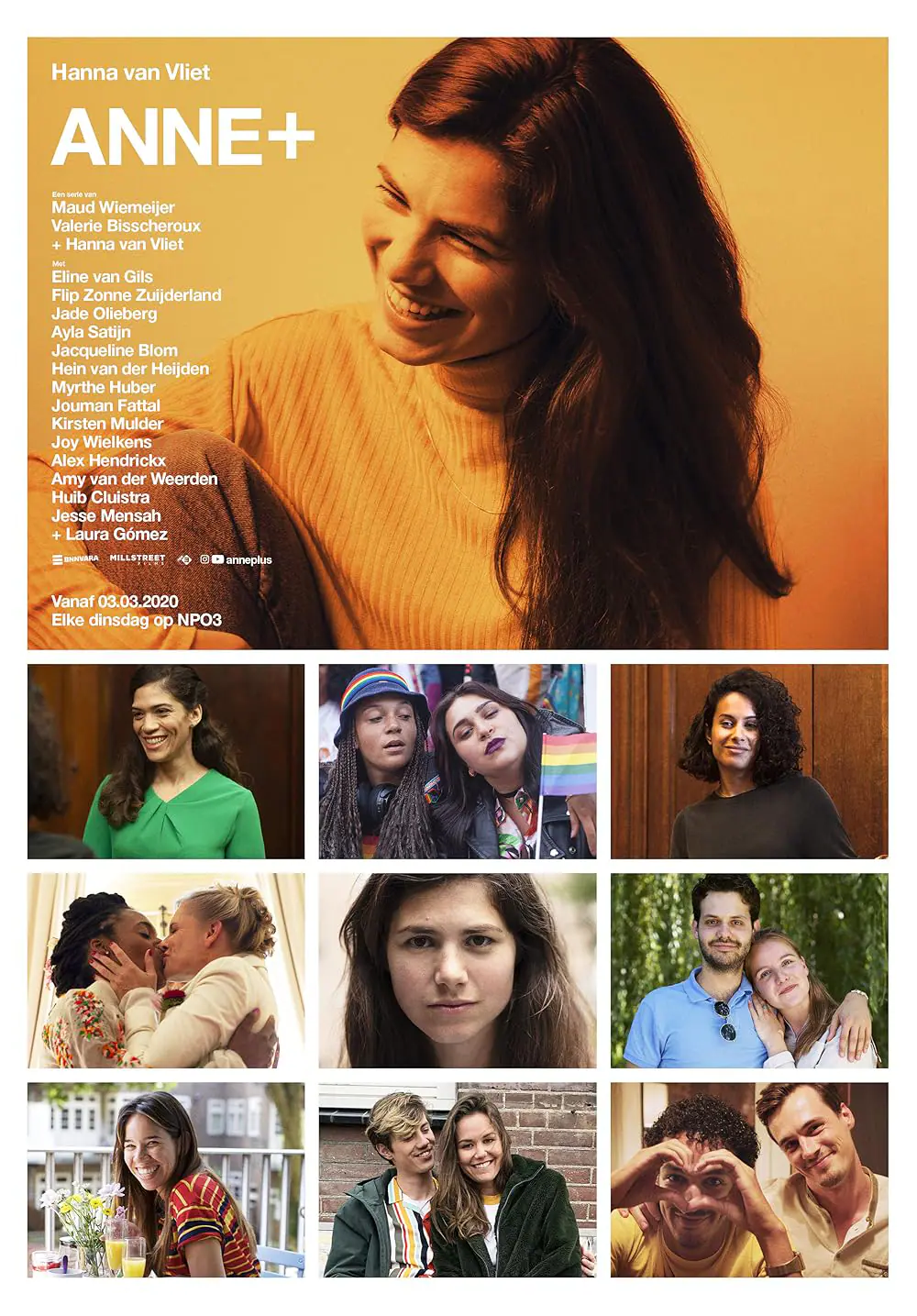
ANNE+ Review: A New Milestone in 20-Something Female Narrative, the Trajectory of Growth Left by Love
Everyone carries fragments of their clumsy, inexperienced years within their hearts. The burning desire to merge with another, the acute sense of isolation when left alone, and the inner lack that one finally confronts only after a relationship ends—these are universal emotions we have all experienced.
The Dutch web series ANNE+ intimately traces the romantic history of a woman navigating her twenties, the most brilliant yet unstable period of life. Through her journey, the series examines how the act of loving another is sublimated into a reflective path toward self-discovery.
🌿 Moments This Web Drama Resonates Deeply
- For those who have trembled as they faced unfamiliar versions of themselves at the beginning and end of every relationship.
- For those who wish to realize that past lovers are not objects of resentment, but precious fragments of life that have shaped who they are today.
- For those who desire a high-density narrative that eschews grand external oppression to focus instead on the internal psychology of characters and the essence of relationships.
The reason to read this piece to the end is that it transcends simple queer romance, offering a structural answer to “achieving independent selfhood.”
🎞 Notes Before Watching
While this work depicts the love and breakups of women in their twenties and includes everyday expressions of affection such as kissing scenes, it does not focus on provocative or sensationalized depictions. It is an in-depth drama centered on the subtle emotional lines and shifting psychological dynamics between characters.
🎬 Show Information
- Title: ANNE+ (2018)
- Director: Valerie Bisscheroux
- Screenplay: Maud Wiemeijer
- Country: Netherlands
- Genre: Drama, Romance, Queer
- Running Time: Approximately 20–30 minutes per episode
- Platform: Netflix, YouTube
- Cast: Hanna van Vliet (as Anne), Lynn van Royen (as Lily), Tara Elders (as Esther), Olga Loureiro (as Sara), Lisa Smit (as Janna)
📖 ANNE+ Synopsis: Reassembling the World of Self Through Fragments of Romance [No Spoilers]
On her first weekend after moving into a new apartment in Amsterdam, 24-year-old university graduate Anne unexpectedly runs into Lily, her first love and ex-girlfriend, on the street. This awkward reunion becomes a turning point, awakening memories of her university years that had lain dormant in her heart.
From Lily, her official partner since high school with whom she had to part ways amidst the changes of the big city; to Janna, who left a deep anxiety behind a fierce sense of liberation; to Sophie, who trapped her in a virtual fantasy on a smartphone screen; to Esther, an editor-in-chief twenty years her senior who made her realize invisible power dynamics; and finally to Sara, with whom she cohabited and dreamed of a future, only to hit a wall due to confusion over sexual identity. Anne falters within the vortex of conflict every time, repeating her mistakes.
The cause of these conflicts lies not externally, but in the internal timing and shifting values of characters growing in different directions. Will Anne manage to navigate the traces of these numerous relationships and succeed in standing entirely on her own?
🧭 A World Without External Enemies: A Gaze Toward Inner Growth
The most distinctive achievement of ANNE+ is its bold elimination of the trauma narrative—such as homophobia or familial opposition—that conventional queer narratives frequently replicate. Anne’s parents fully support her identity, and Amsterdam’s queer community serves as a safe haven for her.
This directorial choice functions as an aesthetic device that shifts the focus of the drama away from external struggles and toward an analysis of the characters’ internal psychological structures. The conflicts Anne experiences stem entirely from the universal nature of human relationships, arising in the process of forming and maintaining bonds with others. By imbuing a non-heterosexual character with a realistic humanity—showing that queer individuals can be just as selfish, indecisive, and messy in romance as anyone else—the narrative secures its authenticity.
🔗 The Mirror of the Other: Self-Reflection Revealed Through Relationship Types
The five lovers Anne passes through represent diverse, non-monolithic depictions of lesbians, while simultaneously serving as mirrors reflecting Anne’s inner self. In her relationship with her first love, Lily, Anne confronted the hypocrisy of the “self performing the state of being in love.” Through Janna, she realized the limits of impulsive deviance used to fill an internal void.
The episode with Sophie sharply satirizes relationship structures in the digital age, exposing Anne’s immaturity in falling in love with a fantasy hidden behind text. Her workplace romance with Esther provides an experience of being overwhelmed by the invisible power structures created by age and professional rank, while her cohabitation with Sara demonstrates how differing levels of certainty regarding identity can misalign life’s timing.
All these relational curves form a structured process of growth through which Anne, using the mirror of the other, comes to clearly recognize her own limitations and desires.
🔎 Reinterpretation of the Ending: The Permanent Consolidation of Self Left by the Dissolution of Relationships
Returning to the present tense in the final episode, Anne sits down with her first love, Lily. They calmly voice past resentments and mutual immaturity, ultimately forgiving one another. This ending serves as a declaration that the bonds shared with past lovers have not vanished into nothingness, but are precious, cumulative pieces that have sculpted the subject who is Anne today.
As the plus sign (+) in the title implies, the protagonist, who previously sought validation only in the form of “Anne + Someone,” finally learns to become whole without the approval of another. The streets of Amsterdam that Anne walks after the conclusion are no longer spaces stained by romantic failure, but a stage of dignity where autonomous independence is realized.
The ending of this work proves that the severing of a relationship with another does not signify the collapse of the self, but rather becomes the catalyst for achieving complete integration with one’s true interiority.
💬 ANNE+: Realistic Immaturity and the Public Accessibility of Queer Narratives
Q. How should we interpret the criticism that the protagonist Anne’s selfish and indecisive attitude hinders immersion?
Anne certainly exhibits immature facets during her romances, such as misunderstanding her partners’ feelings or consuming others to satisfy her own deficiencies. However, this discomfort represents the aesthetic of realistic representation intended by the work.
Unlike queer characters in conventional media who have been preserved as “perfect, flawless victims” to increase mainstream acceptance, ANNE+ exposes the trial and error of twenties youth without filter or omission. Anne’s immaturity is not an object of moral condemnation; rather, it stands as realistic evidence of the growing pains everyone must endure, completing an open structure that allows viewers to project their own pasts onto the screen.
✨ ANNE+: Navigating the Unknown of the Other to Reach the Center of the Self
The conclusion of ANNE+ goes beyond a mere chronicle of a woman’s romantic life, posing questions about relationships and identity to everyone living in contemporary society. We constantly seek validation of our worth through union with others, yet true solidarity and love become possible only when one secures the autonomy to stand entirely alone.
This drama structurally demonstrates that the loss of love is not a failure in life, but an inevitable rite of passage that expands the territory of the self. True growth means reclaiming the center of gravity that had leaned toward another, and planting one’s feet firmly on the ground.
✉️ Lingering Impressions and Closing Question
When a relationship with another fractured and you ultimately faced a breakup, what aspect of your inner self did you discover through that loss? What kind of fragment have the traces left by past lovers become in making you who you are today? Please share your valuable experiences and thoughts in the comments.
🔮 Violet Screen’s Focused Curation
TV Series: Dickinson (2019)
- Reason for Recommendation: This work unpacks the relationship between the 19th-century genius poet Emily Dickinson and her closest friend and sister-in-law, Sue Gilbert, with modern sensibilities and refined mise-en-scène. It offers an in-depth analysis of the profound solidarity and trajectory of love between women who served as each other’s artistic and emotional focal points despite societal constraints.
Film: Tomboy (2011)
- Reason for Recommendation: Set in a new neighborhood, the film follows Laure, a protagonist in their early teens who introduces themselves as “Michaël,” exploring the subtle and pure emotional textures of the bond formed with peers—particularly Lisa, who feels a strong attraction to Michaël. It captures the exploration of identity and the relational tension unique to childhood through a delicate, unexaggerated direction, leaving a profound resonance.
To provide a more stable publishing environment, multilingual content, and better communication with our readers, we have moved our official publication to Substack.
All new film reviews and critical essays will be published on our new platform. This website will be closing down soon, so we would greatly appreciate it if you subscribed to our new space.
TODAY'S QUESTION
What changed the most for you after coming out?
Your answer isn't saved. Feel free to share it in the comments below.


You May Also Like

Sky Rojo: Wendy and Greta, a Sanctuary of Redemption Found at the End of a Blood-Soaked Revenge

Vigil Ending Explained and Plot Summary: A Solidarity of Love and Trauma Awakened by Deep-Sea Isolation