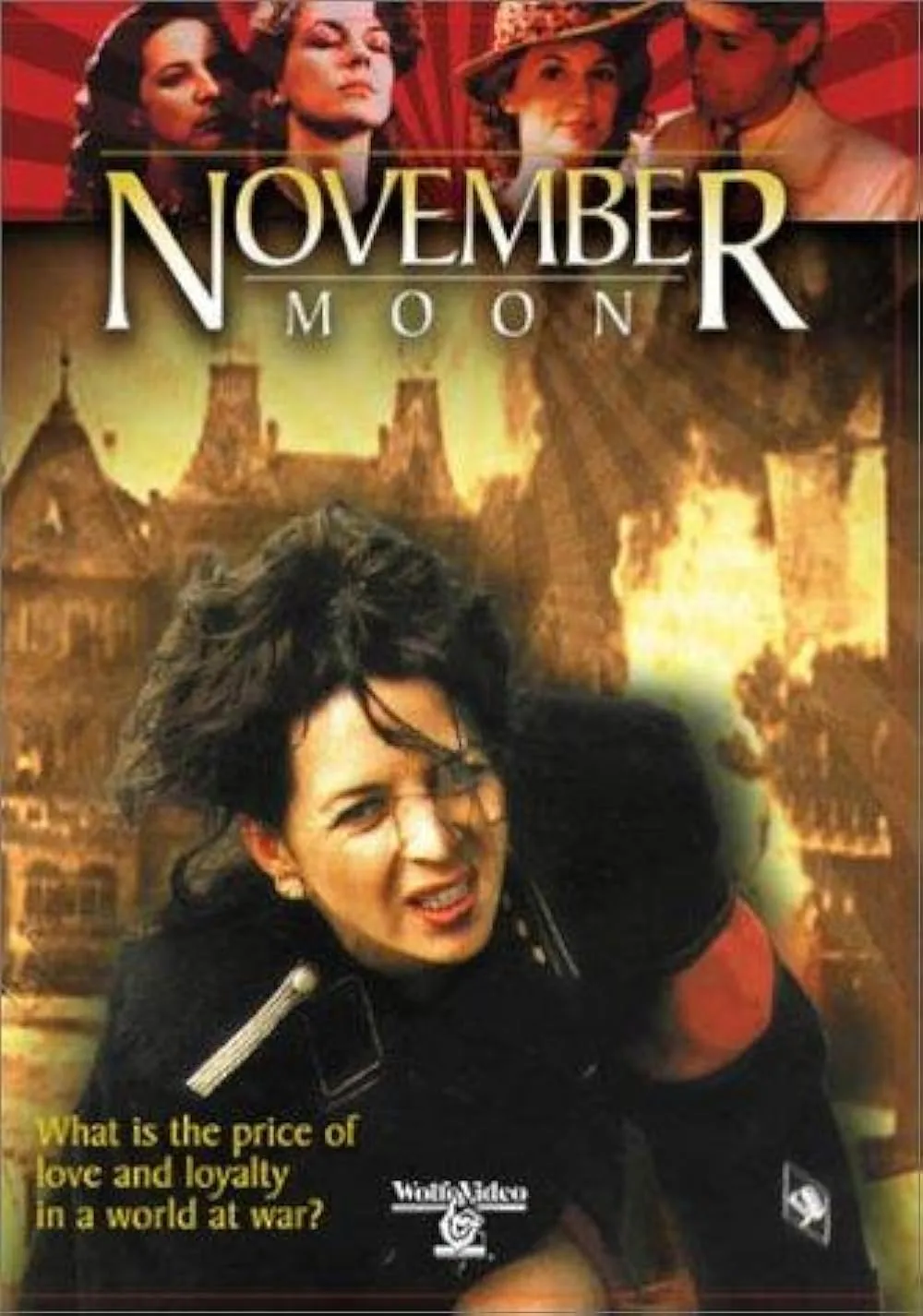
November Moon (1985): A Record of Survival and Fierce Love Blooming in an Age of Tragedy
Under the massive cogs of history, individual lives are all too easily worn away and erased. Particularly amidst the extreme violence of war, the existence of minorities and their love are often buried without ever being recorded. Set against the harsh temporal and spatial backdrop of Nazi-occupied France, the film November Moon gazes with excruciating calmness at the solidarity and love of two women standing before the absolute imperative of survival.
Moving beyond the conventional framework of a period drama, this piece is an intense human drama that demonstrates how love can become the most powerful form of resistance. The gaze of these characters, who cannot let go of each other even while anticipating catastrophe, poses a profound question that transcends eras: what is the ultimate form of salvation one human can offer to another?
🌿 The Moments This Film Deeply Permeates
- Those moments when you want to immerse yourself deeply in the relationship between two women who sought to save only each other in a place where national, racial, and ideological boundaries collapsed.
- When you wish to witness on screen the hidden desires and desperate struggles for survival of minorities obscured by grand historical narratives.
- When you want to confirm the sublime essence of a love that never fades, even in the face of external scrutiny and societal condemnation.
- Why you must read to the end: This review does not merely denounce the violence of war; it allows you to fully confront the structural tragedy of how the binary blade of history—labeling actions strictly as “collaboration” or “resistance”—erases the sacrifices of women.
🎞 Note Before Viewing
As this work is set against the tyrannical era of the Nazi occupation, it depicts the harsh realities of war, including the atrocities experienced by the protagonist and forced labor. While some violent situations occur, the film completely eschews sensationalist direction, remaining thoroughly grounded in historical realism. Rather than relying on visual stimulation, the film is a profound, relationship-centered drama focusing on the psychological pressure and emotional solidarity that these two female characters had to endure to protect one another.
🎬 Film Information
- Title: November Moon (Original Title: Novembermond, 1985)
- Director: Alexandra von Grote
- Screenplay: Alexandra von Grote
- Country: Germany, France
- Genre: Drama, Romance, War
- Running Time: 106 minutes
- Platform: International VOD & Archive Stores
- Cast: Gabriele Osburg, Christiane Millet
📖 November Moon: The Intertwined Fates and Desperate Survival of Two Women Beginning in Tragic Paris [No Spoilers]
In the late 1930s, fleeing the severe persecution of the Nazis in Berlin, Germany, a Jewish woman named November (Gabriele Osburg) endures day by day in Paris, France, under a precarious illegal immigrant status. Amidst these harsh surroundings, she happens to meet the siblings Laurent and Férial (Christiane Millet). While Laurent expresses romantic interest in November, November and Férial find themselves uncontrollably drawn to each other, falling into a deep love.
However, when the German army occupies Paris in 1940, their peace is shattered. November flees to the southern countryside for safety, but due to the betrayal of those she trusted, she is arrested by the Gestapo and subjected to brutal internment. To protect November after she narrowly escapes and returns to Paris with a broken body, Férial undertakes the most dangerous and humiliating choice in the world.
Férial approaches Marcel, the editor of an antisemitic collaborationist newspaper, pretending to be a Nazi collaborator. She begins a precarious double life, hiding November inside her home and securing food rations. The tense and hazardous cohabitation between Férial, who wears the mask of a collaborator to save her lover, and November, who quietly clings to life in the darkness beneath the sofa, barrels toward the end of the war.
👁🗨 The Politics of Body and Space for Two Women Facing the Violence of History
The film November Moon tenaciously captures how women—specifically those holding marginalized, intersecting identities as both lesbians and Jews—occupy and are dispossessed of space within the grand chronicle of war. The space November occupies in the film begins in the open streets of Paris, gradually narrowing to a cramped countryside hiding place, the enclosed space of an internment camp, and finally, to the ultimate claustrophobic space beneath the sofa in Férial’s home.
This space under the sofa serves as a visual mise-en-scène symbolizing the ontological position of a minority who must be completely isolated and erased from the outside world, even as it functions as the sole sanctuary guaranteeing November’s survival. Conversely, to protect the intimate interior space that is November, Férial throws herself into the most contaminated external spaces: the antisemitic newspaper office and the embrace of a collaborator. While this contrast between the interior and exterior appears to invert the power dynamic between the two women, it actually demonstrates that both individuals remain mortgaged in body and mind to the massive mechanisms of patriarchal state power and war.
Director Alexandra von Grote captures this distressing relational structure without exaggerated sentimentality, utilizing calm long takes and static camera work to seamlessly transfer the characters’ sense of psychological isolation to the audience.
🔎 Reinterpreting the End of November Moon: Another Form of Violence and Stigma in the Name of Liberation
When the war finally ends and Paris is liberated, the film resolutely rejects the narrative of victory and jubilation adopted by the majority of war films. Férial, who became an assistant to a Nazi collaborator solely to save November, is branded a “streetwalker” or a “collaborator” by a populace consumed by the madness of liberation; she is dragged into the streets, becoming the target of violence and public humiliation. This ending of November Moon exposes the barbarism of how easily victorious history reduces and punishes a woman’s complex struggle for survival as mere sexual collaboration.
November survives, but she is forced to watch helplessly as the lover who saved her is torn apart before the public eye. By facing both physical and social death, an irreparable, permanent fracture is left within their relationship. The war is over, but the lives of these two women can never return to what they once were; the extrajudicial punishment unfolding in the public square leaves a bitter aftertaste, proving that even when state power changes hands, the fundamental nature of violence directed at women and minorities remains unaltered.
Historical liberation achieves its completion by defining a woman’s private sacrifice and choices for survival as a sin. Through this declarative tragedy, the film poses a question to the audience. Amidst the unjustifiable rage of the masses, the final gaze exchanged between the two women demonstrates the cruel aftermath of war, which tarnishes even the values of dignity and growth.
❓ The Representation of Women and Narrative Ambiguity in November Moon
Q. From a contemporary perspective, doesn’t the setup of Férial forming a fake relationship with the Nazi collaborator Marcel compromise female agency or appear dependent on a man?
A. Some viewers and critics point to a limitation in the narrative, arguing that Férial relies on male power to secure survival. However, a structural analysis reveals that this is not male dependency, but rather the most active form of subversion and resistance, turning the system of patriarchal Nazi power against itself. To Férial, Marcel is never an object of love; he is merely a “tool” to protect her autonomous love for November. By refusing to glamorize the shame and fear Férial experiences and displaying it rawly, the film denounces the cruelty of the survival strategies the powerless were forced to choose. Therefore, it is more accurate to interpret this not as a compromise of agency, but as the heaviest and most perilous autonomous choice a woman could execute under extreme circumstances. The judgment ultimately remains with the reader who witnesses this contradictory historical moment.
Q. How do you view the criticism that the scene near the end of the film, where Férial is shaved and assaulted by the public immediately after the liberation of Paris, is excessively sadistic and polarizing?
A. Because this scene is aurally and visually distressing and uncomfortable, it has generated significant controversy and polarized opinions since the film’s release. This segment, which realistically recreates the historical reality of the Épuration sauvage (wild purges) that occurred immediately after the liberation of France, represents a thematic and aesthetic peak intentionally staged by the director to expose the blind patriotism of the masses and the underlying misogyny embedded within it. By unsparingly showing the historical fact that female collaborators were punished in ways specifically designed to inflict physical humiliation and sexual shame compared to their male counterparts, the film warns against another form of fascism hiding behind the intoxication of victory. This tragic staging was not for emotional provocation, but was an essential device to indict the hypocrisy of history.
✨ November Moon: A Record of Covert Solidarity Where Only Each Other Mattered in an Age of Massive Madness
At the end of the harrowing narrative of November Moon, we confront the contemporary implications this work offers. This film does not merely remain a record of a past war; it sharply interrogates how the binary definitions of patriotism, or standards of correctness defined by the societal majority today, continue to butcher the lives of minorities.
Férial’s choice to abandon her own safety to save another reminds us of the true meaning of solidarity and the responsibility of love that we have lost in contemporary society. The film weightily demonstrates that human identity and dignity cannot be dictated by grand narratives of state or ideology, and that only the solidarity of women blooming in the darkest places allowed them to remain alive as human beings.
True salvation does not begin with institutions, but solely with the resolute hand one human being extends to another.
💬 Silence and Choice Before Historical Stigma
When the state and the masses drag you into the public square, calling your love a crime and a betrayal, will you remain silent before that unjust stigma, or will you take your lover’s hand and face the world together? This is a moment that compels you to contemplate the choice you would make between your own survival and the dignity of the person you cherish.
🎞 Another Female Narrative Curation Proposed by Violet Screen
- Anaïs in Love (2021)
- Reason for Recommendation: While November Moon deals with a resolute love amidst the heavy tragedy of war, this film, set in contemporary France, depicts the brilliant and unstoppable emotional sparks between Anaïs, a young woman moving recklessly toward her desires and emotions, and Émilie, an intellectual older woman. It offers a lighthearted variation where one can enjoy the uninhibited attraction between women, free from historical oppression.
- Aimée & Jaguar (1999)
- Reason for Recommendation: Set in Berlin during World War II, this film is based on the true story of the dangerous and passionate love between Lilly (Aimée), the wife of a Nazi official and a mother of four, and Felice (Jaguar), a Jewish underground resistance member. It shares common ground as a lesbian romance blossoming within a historical tragedy, while offering a different emotional wave with its deeper melodramatic sentiment.
TODAY'S QUESTION
Which character has comforted you lately?
Your answer isn't saved. Feel free to share it in the comments below.


You May Also Like
Carmilla (2019): A Gothic Reading of Forbidden Desire and Female Narrative

Benedetta Interpretation: A Sacred and Provocative Holy War of Two Women Who Substituted Desire for Faith