Snapshots (2018) Review: Love Shaken by 50-Year-Old Secret Photos and the Solidarity of Three Women
Sometimes, the most passionate season of a person’s life becomes a solid secret, submerged beneath the surface. Desire that bloomed outside the bounds of normative society bated its breath within the shadows and highlights of black-and-white photographs, left unsaid in words.
Yet all that has been repressed inevitably returns. The trauma of an era in which survival required self-denial is re-enacted across generations as a wave demanding truth in the life of another woman.
🌿 Moments When This Film Sinks in Deeply
- Those who still cherish the memory of a past love in a corner of their heart
- Those who wish to understand the deep-rooted intergenerational conflict and trauma spanning grandmother, daughter, and granddaughter
- Those who resonate with the life of a woman who strived to preserve her truth amidst societal oppression
- Why You Should Read to the End: Beyond a simple queer romance, this piece offers a humanistic reinterpretation of the emotional peak forged by human dignity and the limits of an era.
🎞 Note Before Watching
This film is a classic drama that avoids provocative scenes or excessive staging, focusing instead on the intricate emotional lines and shifting relationships between characters.
It paints a delicate, elegant portrait of a secret love that bloomed within the societal constraints of the 1960s, and the ripples it sends through present-day family relationships.
🎬 Movie Information
- Title: Snapshots (2018)
- Director: Melanie Mayron
- Screenplay: Jan Miller Corran, Katherine Cortez
- Country: 🇺🇸 USA
- Genre: Drama / Family / Queer
- Runtime: 95 minutes
- Platform: Gravitas Ventures / Major VODs
- Cast: Piper Laurie (as Rose), Brooke Adams (as Patty), Emily Baldoni (as Allison), Emily Goss (as Louise), Shannon Collis (as Young Rose)
📖 Snapshots Synopsis: The Time of Three Women Uncovered by Old Photos in a Brownie Camera [No Spoilers]
85-year-old Rose is a stubborn elderly woman living a quiet, solitary life in an isolated lakeside home. One weekend, her daughter Patty, grieving and heartbroken over the loss of her husband, and her granddaughter Allison, experiencing confusion over her pregnancy and marriage, pay her a visit.
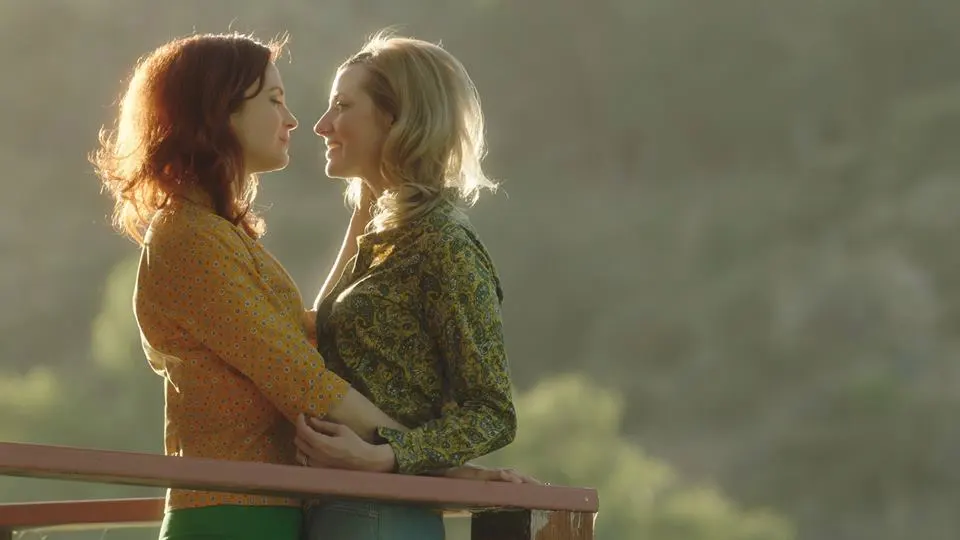
During this brief reunion of the three women, Allison discovers an old Brownie camera and a roll of undeveloped film. Captured on that film were profoundly intimate and happy moments shared in the early 1960s between a young Rose and her neighbor, Louise.
As these hidden photographs finally see the light of day, the once-tranquil lakeside house transforms into a stage of emotional turmoil where long-held trauma and secrets burst forth.
📸 Symbolism of Black-and-White Photos in Snapshots and Interpretation of the Repressed Queer Narrative
The black-and-white photographs discovered in the film are not merely records of the past or simple props; they serve as powerful symbols testifying to female desire that patriarchal society sought to conceal.
The historical backdrop of the 1960s imposed standardized roles of dutiful wives and devoted mothers upon women, denying the very existence of same-sex affection that strayed outside that mold.
The camera lens handed to Rose by Louise functions as an asylum of identity, capturing their authentic selves away from the world’s prejudice.
👵 Conflict Among Three Generations of Women in Snapshots and an Expanded Interpretation of Female Identity
Rose’s confession of her secret causes a massive rift for her daughter Patty and granddaughter Allison, illuminating in turn the cruel survival conditions intersecting across generations of women.
Patty, conservative and harboring aversion toward homosexuality, chose a life of compliance despite being scarred by her husband’s infidelity and control. Facing her mother’s truth, she experiences confusion as if her entire life has been invalidated.
Conversely, granddaughter Allison, wavering between her relationship with a female lover and an unwanted pregnancy, finds the courage through her grandmother’s past to decide her own life autonomously.
🔎 Reinterpretation of Snapshots’ Ending: Eternal Love Reached Across a 50-Year Gap
The ending, in which Rose confronts the memory of the deceased Louise, is an emotional declaration that completes her own dignity rather than a simple sublimation of grief or lingering regret.
Rose’s choice to remain beside her husband and child for 50 years without achieving social liberation may appear externally as surrender; however, keeping Louise’s presence intact deep within her heart was a noble preservation that safeguarded her own truth.
The conclusion of Rose’s story is a structural declaration of agency, fulfilled by restoring the self that had been concealed behind social conformity.
Though failing to flee together in real life left an eternal fracture, the moment Rose confronts that memory and confesses it to her family, the love between Rose and Louise achieves complete love in the present moment.
❓ Generational Differences in Perspective and Narrative Limitations Surrounding Snapshots
Q. How do you view the criticism that the 1960s flashback scenes and the present-day conflict among the three women feel somewhat cliché or melodramatic?
Some critics point out that the resolution of family conflict in the present timeline does not escape the conventional drama framework.
However, this familiar structure carries an authenticity rooted in real life, originating from the actual story disclosed by the producer’s 94-year-old mother just before her passing.
By utilizing genre familiarity, it can be interpreted as an aesthetic choice that grounded a potentially complex intergenerational queer narrative, making it emotionally accessible to a broader audience.
✨ The Essence of Love Left by Snapshots and a Response on Living an Autonomous Life
The film Snapshots poignantiy reminds us that the value of love is not proven solely by results such as ‘success and possession.’
Even if it was a love born in the wrong era, a truthful memory that completely shook a person’s soul withstands 50 years of time to redeem the lives of another generation.
True love is defined not by the length of time spent together, but by how autonomously that presence transformed the trajectory of one’s life.
💬 Do You Have the Courage to Choose Your True Self at Life’s Pivotal Moments?
What is your own secret and truth buried deep in your heart due to the gaze of others and societal expectations?
Between maintaining the safest yet false life, and choosing an uncertain but honest life to yourself—which side will you stand on?
🔮 Violet Screen Curation: Another Perspective Where Women Save the World of Women
- 《Passing》 (2021)Reason for Recommendation: Set in 1920s New York, this masterwork black-and-white film explores dense psychological warfare between two women longing for and guarding against each other on the boundaries of racial and sexual identity.
- 《Tell It to the Bees》 (2018)Reason for Recommendation: Set in a conservative small British town in the 1950s, this elegant and deep emotional drama follows two women carrying societal prejudice and trauma as they find sanctuary and courage through each other’s presence.
To provide a more stable publishing environment, multilingual content, and better communication with our readers, we have moved our official publication to Substack.
All new film reviews and critical essays will be published on our new platform. This website will be closing down soon, so we would greatly appreciate it if you subscribed to our new space.
TODAY'S QUESTION
What changed the most for you after coming out?
Your answer isn't saved. Feel free to share it in the comments below.


You May Also Like
Love Is a Map (2022): The Aesthetics of Female Queer Narrative on the Coordinates of Loss
Frida (2002) Film Review: A Record of Immortal Desire and Survival, Sublimating Pain into Art