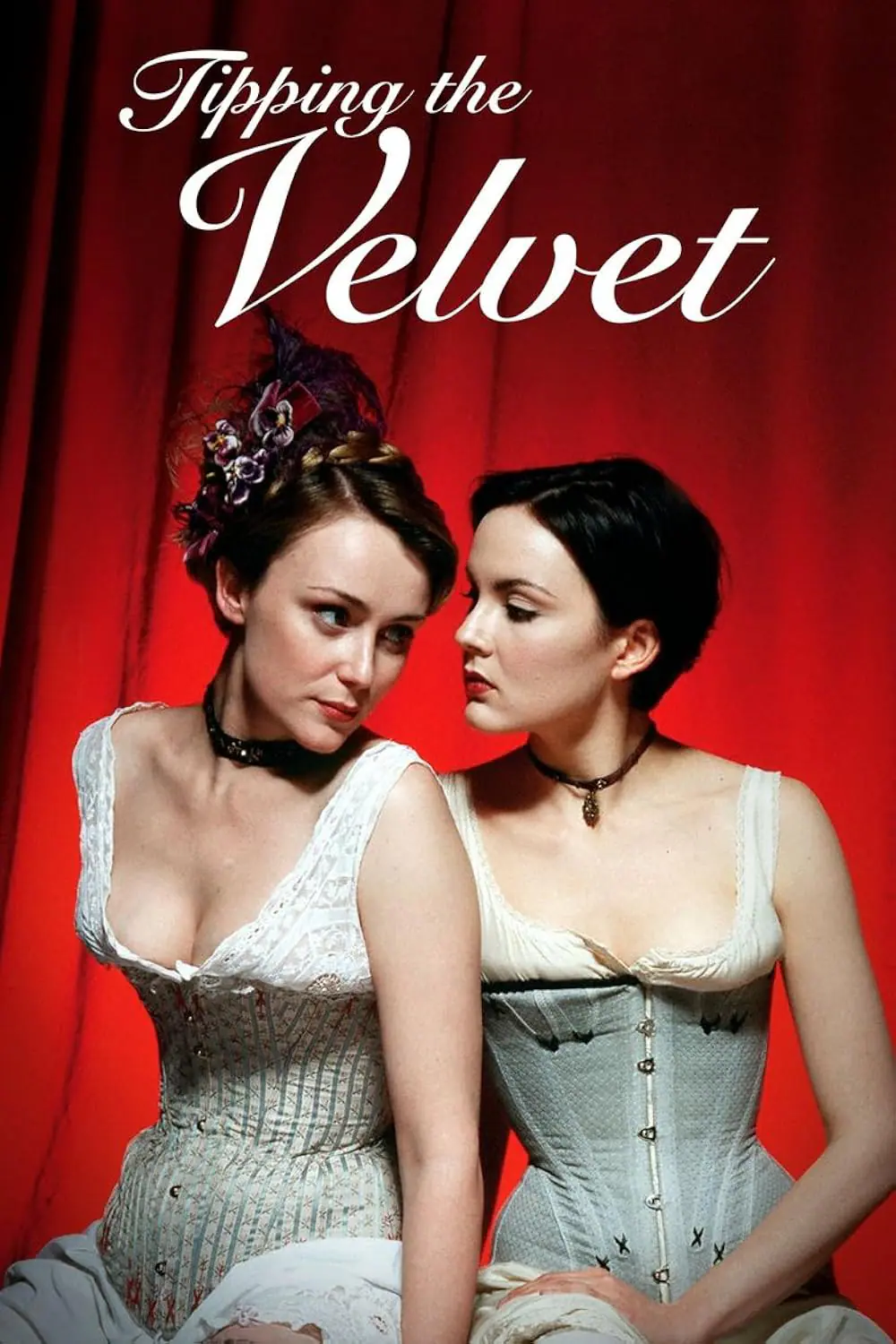
Tipping the Velvet: A Journey of Losing and Finding Oneself on the Stage of Desire
When the daily life you believed to be most stable crumbles with a single glance, do we call it ‘depravity’ or ‘liberation’? Love sometimes becomes a storm that drives us out of a comfortable home and onto the harsh streets.
Capturing the feverish breath hidden beneath the rigid order of the Victorian era, this work poses a fierce question that goes beyond simply how to love someone, but rather ‘how to survive as myself.’ From the hands that once shucked oyster shells, passing through the glamorous stage and the abyss of degradation, to finally holding someone’s hand once more—that undulating trajectory mirrors the desires of those of us living today.
🌿 Moments When This Drama Deeply Permeates
- For you, who have tossed and turned over the destructive allure of a strange thrill rather than familiar tranquility.
- For those souls who have experienced losing themselves within the power dynamics of what is called love.
- When you wish to glimpse the secret yet daring solidarity of women hidden behind ornate dresses and corsets.
- The reason you should read to the end: Beyond a simple period romance, it allows you to witness the miraculous process of a woman completing her true ‘self-narrative’ while experiencing the rock bottom of social class and sexual identity.
🎞 Note Before Watching
Set in 19th-century England, this work unreservedly depicts the deep emotional communion and physical desire between women. It is an emotion-driven epic that focuses on the detailed portrayal of character growth and relational dynamics rather than provocative depiction.
🎬 Drama Information
- Title: Tipping the Velvet (2002)
- Director: Geoffrey Sax
- Screenplay: Andrew Davies
- Original Work: Novel of the same name by Sarah Waters
- Country: UK
- Genre: Period, Romance, Drama
- Running Time: Approx. 177 minutes (3 parts)
- Platform: BBC
- Cast: Rachael Stirling, Keeley Hawes, Anna Maxwell Martin, Jodhi May
📖 Tipping the Velvet: The Process of Nancy’s Ordinary Life Transitioning into a Fantasy on Stage [No Spoilers]
In the small town of Whitstable, England, Nancy Astley, an ordinary girl running an oyster restaurant with her family, finds her life’s direction completely transformed the moment she meets Kitty Butler, a music hall star who performs in male drag. Entranced by Kitty’s captivating stage presence and the mysterious charm that blurs gender boundaries, Nancy follows her to London.
Under the glamorous lights of London, the two rise to success as a ‘male impersonator duo’ and develop into a secret romantic relationship. However, at the peak of their success, Kitty betrays Nancy by choosing social stability and a conventional marriage. Left alone, Nancy is cast out into the cold streets of London and undergoes extreme life changes, living as a rent boy in male drag for survival or becoming a plaything for an aristocratic woman.
Through the processes of betrayal, possession, and devotion that Nancy experiences across various relationships, this work meticulously portrays a long and arduous journey toward finding the true form of love and the self.
🎭 Kitty and Nancy: An Interpretation of Unbalanced Desire Hidden Behind the Mask of the Stage
🎭 The Collision of Virtual and Reality on Stage: An Analysis of the Relationship Structure between Kitty and Nancy
The music hall that opens Tipping the Velvet is a space of liberation where gender binaries are destroyed, yet simultaneously a place of deception where a strictly voyeuristic gaze exists. The fascination Nancy feels for Kitty transcends the simple realization of sexual orientation; it was a longing for the possibility of escaping the standardized life of a woman.
However, for Kitty, male drag was merely a ‘professional tool.’ Outside the stage, she attempts to play the role of a strictly conforming Victorian woman. Conversely, Nancy accepts that mask as her own skin. The discrepancy in the ‘temperature of identity’ arising here eventually leads to Kitty’s betrayal, proving that the relationship between the two was a structure of ‘idol and follower’ rather than ‘equal solidarity.’
⛓️ Diana’s Mansion: An Interpretation of the Aesthetic Prison and Power Born of Possessiveness
The world of Diana, a wealthy widow into which the betrayed Nancy drifts, is the most aesthetic yet destructive segment of this drama. Diana treats Nancy not as a human being, but as a ‘living doll’ to satisfy her own sexual fantasies. Here, Nancy’s male drag is no longer a means of free expression as it was with Kitty, but is reduced to a costume for the secret amusement of the upper class.
This section poignantly demonstrates how class and wealth form power structures of dominance and subordination even in relationships between women. The process of Nancy escaping this gilded prison signifies an awakening of the self that refuses a life tailored to the desires of others and confronts her own humble reality.
🕯️ Meeting Florence: The Aesthetics of Equal Solidarity Filling the Void
Florence, a socialist activist Nancy meets when she has lost everything and reached rock bottom, is the ultimate relational alternative that this work aspires to. Florence neither attempts to dress Nancy up nor possess her. She does not question Nancy’s past and respects her current labor and value.
While previous relationships unfolded under ornate costumes and stage lights, the relationship with Florence blossoms at a modest dining table, over books, and at the sites of struggle. This suggests that the true love Tipping the Velvet speaks of is not becoming a mirror that reflects each other, but a companionate solidarity of walking together while looking at the same place.
🔎 Reinterpreting the Ending: The Face of the True ‘Self’ Nancy Encounters after Stepping Down from the Stage
In the conclusion of Tipping the Velvet, Nancy stands on the stage once more, but this time she stands before the crowd as her whole self, rather than as someone’s assistant. The ending, where she sheds her ornate attire and blends into the ordinary citizens with Florence, symbolizes the sublimity of the ordinary attained after a long wandering.
While many might have expected a dramatic reunion with Kitty or revenge against Diana, this work cleverly treats all that past as a ‘station passed through.’ Nancy learned ‘passion’ from Kitty, ‘survival’ from Diana, and ‘settlement’ from Florence. The smile Nancy wears at the end is no longer that of an actress craving the applause of others, but the composure of a sovereign who has gained control over her own life.
This ending makes it clear that internal independence of the individual is a prerequisite for love, rather than the complete union of two people. While her past lover Kitty remains trapped in the gaze of others, lingering behind the stage, Nancy moves forward into the square. Growth is not a glamorous return, but gaining the freedom of having a home to return to.
🧐 [Tipping the Velvet] Interpretation and Discourse: How Was the Original’s Subversion Received?
Q1. Some point out that the bold sexual depictions in the work interfere with immersion in the narrative; what is your view?
Admittedly, at the time of its broadcast in the early 2000s, the level of explicitness in this work was subversive. I acknowledge that for some, this may appear as simple provocation. However, these depictions are a device to physically visualize the psychological surges Nancy experiences. Desire is expressed in more extreme forms in an oppressive era, and the physical hardships and pleasures Nancy undergoes function as a map for finding her identity. This should be interpreted as an aesthetic attempt to establish the female body as the subject of the narrative, rather than being merely for show.
Q2. Doesn’t the passive attitude of the protagonist Nancy feel distant from the modern image of women?
In the beginning, Nancy appears passive, acting like Kitty’s shadow. However, this is a realistic setting reflecting the social constraints women faced at the time. Rather, Nancy’s charm lies in the ‘resilience’ that breaks through that passivity. Every time she is betrayed and abandoned, she adapts to a new environment and creates a place for herself. In the sense that she is not a perfect hero, but a character who eventually restores her soul despite being wounded and shaken, Nancy is a figure who can sufficiently resonate with modern audiences.
✨ Tipping the Velvet: Desire Destroys Me, but Love Rebuilds Me
This work is a masterpiece that minutely embroiders modern identity concerns upon the canvas of the 19th century. Nancy’s journey resembles the ‘pain of socialization’ that we all go through. We have all been someone’s Kitty, sometimes Diana’s doll, and finally a wanderer dreaming of Florence.
This drama proves that the essence of a relationship lies in the recognition of existence rather than possession, and that the most intense desire must ultimately result in the courage to face one’s true self. Love is not the process of being incorporated into another’s world, but the process of expanding my world to invite another in.
💬 What color is your ‘Velvet’?
We often conflict between a stable life and destructive desire. Do you have the courage, like Nancy, to throw everything away and jump into a strange world? Or are you still hiding behind a safe stage like Kitty, compromising with reality?
Is the true ‘authenticity’ you think of inside a comfortable oyster shell, or is it somewhere on the harsh streets of London?
💜 Other Recommendations from Violet Screen
- The Favourite (2018)
- Reason for recommendation: Depicts the fierce power struggles among three women for desire and authority. If you want to taste the essence of the chilling power dynamics felt in the Diana chapter of Tipping the Velvet, this is a must-watch.
- Ammonite (2020)
- Reason for recommendation: Set in the Victorian era, it captures the process of two women of different status and character communing through fossil hunting. You can feel the power of solidarity blooming amidst the solitude and silence behind the glamour.
To provide a more stable publishing environment, multilingual content, and better communication with our readers, we have moved our official publication to Substack.
All new film reviews and critical essays will be published on our new platform. This website will be closing down soon, so we would greatly appreciate it if you subscribed to our new space.
TODAY'S QUESTION
What changed the most for you after coming out?
Your answer isn't saved. Feel free to share it in the comments below.


You May Also Like

Orange Is the New Black Analysis: Piper and Alex, a Desperate Desire Blooming in Isolation

Skam Belgique (WTFOCK): A Narrative of Indulgence and Self-Respect Found on an Imperfect Orbit