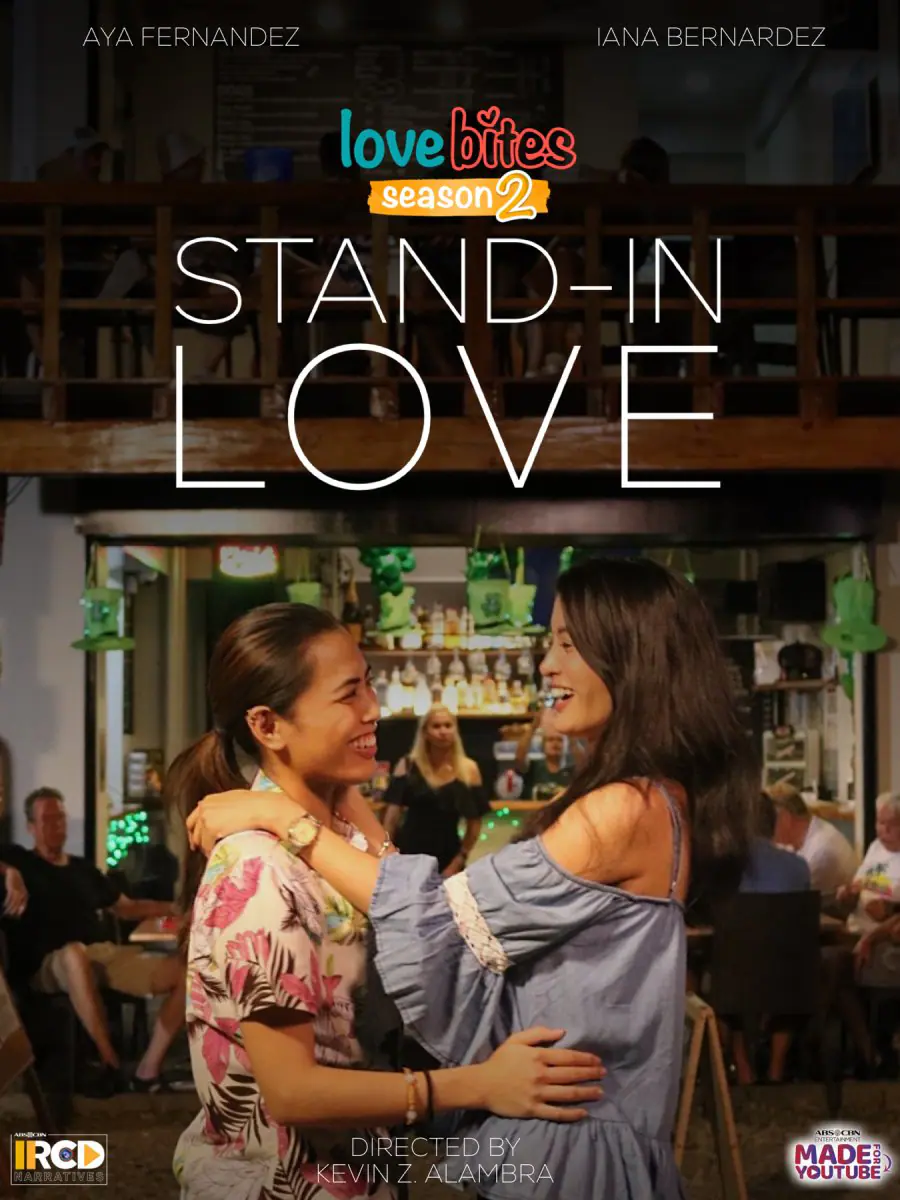
Love Bites: Stand-In Love, Intense Obsession and Transparent Desire Bloomed Within Fake Acting
The most dangerous way a sequestered heart chooses to reach another is by performing a ‘fake.’ We sometimes long to touch another’s skin while hiding behind the safe shield of friendship to avoid getting caught in our sincerity. This drama tenaciously captures that momentary tremor—how a deceptive rehearsal becomes a sharp truth that pierces through each other’s hearts.
🌿 Moments when this web drama sinks in especially deep
- When you are suddenly flustered to find an unfamiliar heat in the affectionate eyes of a long-time friend
- The moment physical contact, offered under the name of a ‘joke,’ no longer feels light
- When you realize your sexual identity is not a sturdy fortress, but a sandcastle that can crumble at any time
- The reason you must read until the end: Because this piece proves what price—the ‘acting’—one must pay to face the truth, moving beyond a simple queer romance.
🎞 Note before watching the web drama
This work focuses on the subtle atmosphere and emotional tension between two women rather than physical exposure or provocative depictions. It has the strong character of a delicate psychological drama exploring the essence of relationships.
🎬 Web Drama Information
- Title: Love Bites (Season 2) — “Stand-In Love” (2023)
- Director: Kevin Alambra, Raz dela Torre
- Screenplay: Based on a true story (Original Story by RCD Narratives)
- Country: Philippines
- Genre: Web drama anthology, Sapphic Romance
- Running Time: Approx. 20 minutes
- Platform: ABS-CBN Entertainment YouTube
- Cast: Iana Bernardez (as Zia), Aya Fernandez (as Cess)
📖 Love Bites: Stand-In Love Synopsis, A Rehearsal for Love Wearing the Mask of Friendship [No Spoilers]
Zia and Cess are best friends who have shared everything since their college days. One day, Zia asks Cess to play the role of a fake lover, claiming she needs ‘dating practice’ to win over a woman she has a crush on. Cess accepts this proposal with a light heart to help her friend, and the two begin to simulate the physical affection and conversations of lovers while going through a date course.
However, as the practice repeats, a desperation beyond a mere rehearsal settles in Zia’s eyes, and Cess’s sturdy ego—once certain of her heterosexuality—begins to waver at Zia’s touch. By the time the gazes of those around them begin to mistake the two for a real couple, the boundary between fake and real collapses entirely. An impulsive incident one night, aided by the influence of alcohol, completely upends the comfortable world of friendship these two have maintained.
🎭 The structure of desire between Zia and Cess revealed when the ‘Stand-In’ safety device is deactivated
In this episode, the setting of a ‘Stand-In’ goes beyond a simple dramatic device to symbolize the characters’ defense mechanisms. For Zia, this play was a ‘safe confession’ to reduce the blow she would receive if her sincerity were rejected; for Cess, it was the only channel through which she could resolve a forbidden curiosity about a same-sex friend under the guise of ‘acting.’
Zia pretends to love an imaginary third party using Cess’s body, but in reality, the substance of all the affection she projects is directed at Cess, who is right in front of her. Conversely, Cess allows Zia’s approach by using her social identity as a ‘heterosexual’ as a shield. Within this power structure, the two perform a dual deception—deceiving each other while simultaneously deceiving themselves.
Ultimately, from an interpretative perspective, their dating rehearsal is not a process of learning love, but closer to a sophisticated alibi designed ‘to get caught’ in the love that already existed. The contradictory human psychology of being able to speak the truth only when wearing a mask is presented compactly within this short running time.
💋 Physical Contact and Psychological Fissures: The Aesthetics of a Moment Redefining Sexual Identity
Within the work, the physical contact between the two does not function as a simple expression of affection, but as a wave that collapses Cess’s internal world. Cess is someone who has never doubted her sexual orientation. However, the ‘practice kiss’ with Zia creates an irreparable fissure in the heterocentric worldview she had built up.
What is noteworthy here is the director’s intent. The camera captures the minute tremors in the air that occur when the physical distance between the two narrows through extreme close-ups, forcing the audience to participate in the confusion Cess feels. This suggests that identity is not a fixed entity, but a fluid one that is constantly reconstructed within relationships with others.
The confusion Cess experiences is not simply a question of ‘Do I like women?’ It is a struggle between the terror of ‘the self I believed myself to be’ collapsing and the instinct that draws her toward the other person despite it. Because this process of struggle is portrayed delicately, the emotional outburst in the latter half of the play is read not as a mere romantic success, but as a dignified expansion of an individual’s self.
🔎 Reinterpretation of the Ending — The Birth of a Real Relationship Brought by the Extinction of the Fake
The scene at the end of the work where Cess acknowledges her confusion and accepts Zia’s sincerity signifies the complete termination of the play called ‘Stand-In.’ Now, there is no longer any place to retreat, nor any shield to make excuses with. In the place where the rehearsal ended, a raw sense of responsibility remains.
This ending places greater structural significance on the fact that Cess broke out of her safety zone of her own accord, rather than the simple fact that the two became lovers. Zia seduced Cess by requesting a stand-in, and Cess broke her own false peace by responding to that seduction.
In the end, their relationship gains an unstable truth called love instead of losing the tranquility called friendship. After the conclusion, they will never again be able to regain the comfort they enjoyed when they were friends. The beginning of a true relationship is always completed by slaying the complacent self of the past.
❓ Issues in Interpreting the Ending of Love Bites: Stand-In Love
Q1. Isn’t the ‘Stand-In’ setting too contrived or expendable in a queer narrative?
From a critical perspective, the method of setting up a detour like ‘practice’ or ‘stand-in’ because one cannot directly reveal same-sex love might feel cliché. However, this work utilizes that contrivance as a psychological defense mechanism for the characters. By revealing it as the most realistic (and simultaneously cowardly) way for those who are not free from the social gaze to test their feelings, it can be evaluated as aesthetically sublimating the realistic hardships of exploring queer identity.
Q2. Is it plausible for Cess’s identity change to occur in just 20 minutes?
A short running time can be a narrative limitation. However, rather than making Cess suddenly declare that she ‘has become a lesbian,’ this drama focuses on the process of her realizing that her feelings for the ‘specific individual Zia’ are uncontrollable. Since it captures the moment of acknowledging the priority of emotion rather than the complete establishment of identity, it secures sufficient emotional persuasiveness even within a short-form format. The judgment is up to the audience, but it is difficult to deny that this sudden realization itself is an essential attribute of love.
✨ Love Bites: Stand-In Love, Life is too short to live as someone else’s stand-in
This work paradoxically shows that ‘love is not something that can be practiced.’ All those rehearsals Zia and Cess attempted eventually became useless before the wave of sincerity. We often volunteer to be someone’s stand-in or hide our true feelings inside acting to avoid being hurt. However, identity and love are not blueprints calculated by the head, but a record of tremors to which the body reacts first.
The completion of love begins only at the point where the acting ends.
💬 What is the rehearsal you’ve hidden in silence?
Have you ever repeated a rehearsal named ‘friendship’ for fear of being hurt by someone you love? Or are you assigning yourself a fake role to deny your identity?
If you had to choose between staying in the safest-looking friendship or going out into the battlefield of true love even if you might get hurt, which path would you walk?
📽️ Violet Screen Recommendation: Other Perspectives Deepening Women’s Narratives
- Drama <Mine> (2021)
- Reason for Recommendation: A dignified narrative where two women, who were former lovers, solidary and struggle in their respective positions within the closed space of a grand mansion. While “Stand-In Love” deals with a fresh awakening of identity, Mine shows the intense and sublime forms of love of mature women.
- Film <Moonlit Winter> (2019)
- Reason for Recommendation: A journey of a middle-aged woman who has lived a repressed life after receiving a letter from her first love (a woman). It is the warmest consolation offered to those who hid themselves due to social oppression and a record of the courage to liquidate a life lived as a ‘stand-in.’
To provide a more stable publishing environment, multilingual content, and better communication with our readers, we have moved our official publication to Substack.
All new film reviews and critical essays will be published on our new platform. This website will be closing down soon, so we would greatly appreciate it if you subscribed to our new space.
TODAY'S QUESTION
Which couple, on screen or in real life, are you rooting for right now?
Your answer isn't saved. Feel free to share it in the comments below.


You May Also Like
Beautiful Rebel: Interpretation and Review—A Voice of Desire Blooming Through Isolation

Pages of a Girl (2008) Review: Literary Solidarity Across an Era of Oppression and In-Depth Analysis of Female Narrative