An In-Depth Analysis of Love and Identity Through the Marlene & Rebecca (Marbecca) Narrative in the German Drama ‘Verbotene Liebe’
Every love is a soul’s most reckless yet beautiful attempt to escape an isolated island. We encounter an unexpected other when we believe ourselves to be flawless, or conversely, when we feel too deficient ever to be healed. When the being who understands my wounds most deeply happens to exist outside the orbit prescribed by the world, human beings find themselves at a crossroads.
Whether to remain in the safe prison of the gaze of others, or to step into an unknown abyss where one can fully validate oneself. Moving beyond a simple romance between two women, this story is a record of a fierce and brilliant struggle in which an individual confronts their deepest deficiencies and searches for their identity.
🌿 Moments When This Drama Deeply Permeates
- When you wish to witness the emotional miracle of the latches of a heart—locked away due to past wounds and trauma—gradually melting away through a trusted presence.
- When you want to deeply savor the density of glances trembling precariously on the complex boundary between friendship and love, admiration and desire.
- When you desire to fully immerse yourself in a narrative of growth where individuals refuse to deceive their own essence and courageously march forward, even when facing giant walls like social scrutiny or family.
- Why you must read to the end: Moving beyond a single episode of a long-running drama, it completely deconstructs and reveals the narrative necessity and emotional essence of how the peerless female narrative of ‘Marbecca’ moved the hearts of global fans to inspire the creation of a spin-off.
🎞 Note Before Watching the Drama
This work follows a narrative within a representative, long-running German drama, delicately yet intensely addressing the dense emotional communion and identity struggles between characters. Rather than relying on sensational setups, it focuses on the process of healing wounds and the progression of a relationship. While some passionate emotional expressions and dense intimate scenes are present, these function as important artistic devices showing the process of two souls connecting.
🎬 Drama Information
- Title: Verbotene Liebe (Forbidden Love, 1995–2015) – Focusing on the Marlene & Rebecca Narrative
- Country: Germany
- Genre: Romance, Drama, Melodrama
- Running Time: Approx. 25 minutes per episode (Including broadcasts focusing on the Marbecca narrative and the 5-part spin-off ‘Weil es Liebe ist…’)
- Platform: Das Erste / ARD (At the time of broadcast), currently available on YouTube and various global archive streaming platforms
- Cast: Melanie Kogler (as Marlene von Lahnstein), Tatjana Kästel (as Rebecca von Lahnstein)
📖 The Boundary Between Friendship and Love Drawn by Verbotene Liebe, the Beginning of That Brilliant Attraction [No Spoilers]
Rebecca, the youngest daughter of the Lahnstein family who returns to Düsseldorf after working as a designer in New York, encounters Marlene, the partner of her brother Tristan, by chance. Due to severe past trauma from sexual assault, Marlene was an individual suffering from a complete loss of bodily and sexual confidence. Becoming Marlene’s artistic inspiration, Rebecca dedicatedly helps her overcome her trauma to stand before the world again as a model and as a human being.
The two rapidly become irreplaceable best friends, but an unexpected emotional spark flies during a fitting for a swimwear collection, causing the relationship to spiral in an uncontrollable direction. Recognizing that the feelings she harbors toward Marlene are not mere friendship, Rebecca attempts to suppress them, yet amid suffocating tension, the two share a first kiss and face a passionate night together. However, as Marlene, engulfed in identity confusion and guilt, returns to Tristan and resolves to marry him, their relationship begins to plunge into a whirlpool of immense catastrophe and conflict.
🖤 Healing of Trauma and Awakening of Identity: The Psychological Redemption Narrative of Marlene and Rebecca
The most noteworthy aspect of Marlene and Rebecca’s relationship is that their union takes the form of mutual redemption, transcending simple physical and emotional attraction. The past wound inflicted upon Marlene was a giant wall that completely withered her femininity and ego.
By redefining Marlene’s damaged body image through an artistic lens, Rebecca provides her with a vital breathing space for a new life. The transference of emotion that occurs during this process entails a confusion of identity. To Marlene, Rebecca was not simply a member of the same sex, but the sole sanctuary that embraced her most vulnerable flaws. Their love possesses a structural completeness where deficiency meets deficiency to fill each other’s voids.
🧵 The Symbol of the Wedding Dress and the Explosion of Repressed Desire: Interpretation of Mise-en-scène and Direction
The most pivotal symbol permeating the entire drama is none other than Marlene’s wedding dress, designed by Rebecca herself. This dress is a complex mise-en-scène bearing ambivalent meanings.
In that it is a dress she must wear to marry her brother Tristan, it symbolizes a massive ‘repression’ imposed upon Marlene by social norms and heteronormative ideology. Concurrently, however, the fact that the dress was completed by Rebecca’s hands—and in the exact, perfect form Rebecca saw in a dream—paradoxically signifies the projection of Rebecca’s pure yearning and love toward Marlene. The passionate kiss Marlene bestows upon Rebecca while wearing that very dress on the night before the wedding can be called a milestone aesthetic peak where repression and desire collide head-on and explode.
🔎 Reinterpretation of the Ending — A Chronicle of Total Unity Left by the Escape from the Altar
Marlene’s choice on the day of the wedding—abandoning Tristan at the altar and running toward Rebecca—is not a mere dramatic device of a romantic comedy. Within this drama, the act of Marlene jilting Tristan at the altar is an act announcing a complete severance from the patriarchal family order and the false self that surrounded her. The moment the two flee the castle to Rebecca’s room and mutually confirm their feelings demonstrates that they have shattered the prohibition prescribed by the world (Verbotene Liebe) to construct a world entirely their own.
Naturally, the wounds left by this choice run deep. The presence of Tristan, who writhes in betrayal and sorrow, remains a harsh price and an eternal debt their love must pay. Yet, Marlene’s subsequent growth in the latter half—where she passes through the tunnel of guilt to fully accept her sexual identity and resolves not to hide even before her family—shows a magnificent narrative leap. Rebecca likewise refrains from pressing impatiently, quietly waiting for Marlene to stand up at her own pace, allowing their relationship to be completed not through possession, but through solidarity. Marlene’s choice is a destructive act that fails the expectations of others, while simultaneously standing as the most dignified, constructive leap toward self-redemption. The steadfast trust they display after the conclusion carries over into the spin-off web series ‘Weil es Liebe ist,’ ultimately proving the permanence of an unshakeable love.
💬 What Are the Methods and Limitations of Female Representation in ‘Verbotene Liebe’s Marbecca Narrative?
- Acknowledgment of Critical Perspectives: Criticisms exist that the dramatic and sensational setups unique to soap operas—specifically the ‘taboo’ structure of loving a biological brother’s partner—were consumed as tools to heighten the sensationalism of the narrative.
- Analysis of Structural Causes: Due to the nature of a daily soap opera that requires continuous conflict and stimulation to secure viewership, a tendency arose where the pure emotional lines of the two women were occasionally buried beneath the sensationalized, macro-level conflicts of the family.
- Aesthetic Context and Intent: Nonetheless, by delicately dissolving the process of Marlene overcoming her sexual trauma into her bond with Rebecca, the show transcended a simple voyeuristic gaze. This narrative of two autonomous women healing each other and growing achieved a depth rare in daily dramas of that era.
- Open Conclusion: Whether to view their love as a simple sensationalized scandal or as the triumph of an autonomous female narrative blooming within an oppressive environment ultimately remains the prerogative of each individual viewer, depending on how deeply they empathize with the characters’ emotional authenticity.
✨ ‘Verbotene Liebe’ (Marbecca) – Souls That Willingly Became a Forbidden Love to Become Their Own Whole World
Marlene and Rebecca’s journey tosses a weighty question to those of us living in contemporary society regarding where the ‘courage to face one’s true self’ originates. Deviating from the safe orbit established by others carries immense fear, but human beings finally become whole when encountering a mirror-like presence capable of projecting one’s wounds and essence without addition or subtraction.
This work demonstrates that love is not merely possessing the other, but a rite of passage for growth wherein one finds one’s most authentic self through the mirror of the other. Genuine love redraws the moral boundaries prescribed by society, serving as the most powerful liberating force that allows a human being to exist as their true self.
✉ On the Interior Distance and Waiting Required to Fully Embrace Another’s Wounds
To truly love another may be a silent solidarity—slowing down one’s own pace and waiting mutely until that person breaks through their own walls. Just like Rebecca, who waited until Marlene found her identity.
When a loved one faces immense turmoil and an identity crisis, are you capable of waiting for that person’s pace with unconditional trust like Rebecca? Or do you tend to demand a clear definition of the relationship first to gain certainty? Please share your precious experiences and thoughts in the comments.
🔮 Another Female Narrative Curation Suggested by Violet Screen
- [Loving Her] (2021) Reason for Recommendation: Set against the backdrop of Berlin, Germany, this drama captures the love, breakup, and self-settlement process between women through a sensuous and trendy visual style. It is recommended for those who desire a casual and contemporary female narrative.
- [Stupid Wife] (2022) Reason for Recommendation: Utilizing the classic trope of amnesia, this Brazilian web drama densely depicts the deep bond between two women and the process of recovering lost emotions. It will be a perfect choice for those who appreciate emotional intensity and dedicated narratives.
To provide a more stable publishing environment, multilingual content, and better communication with our readers, we have moved our official publication to Substack.
All new film reviews and critical essays will be published on our new platform. This website will be closing down soon, so we would greatly appreciate it if you subscribed to our new space.
TODAY'S QUESTION
Which character has comforted you lately?
Your answer isn't saved. Feel free to share it in the comments below.


You May Also Like

An In-Depth Analysis of Kick (2007): The Fencing Match of Gender & Sexual Identity, and the Courage to Shed Social Masks
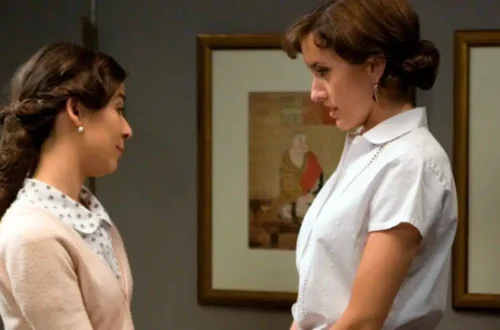
Amar en tiempos revueltos: An Era of Control and Deprivation, a Narrative of Liberation Forged by Two Women