
Yes or No 2.5: The Realist Fracture of Female Narrative and the Interpretation of Love Completed by Solidarity
Although love is frequently described as a domain of choice, for some, it resembles a struggle to prove the very dignity of existence. Emotions that deviate from the trajectory of normativity defined by the world are bound to be constantly doubted and confined within the sophisticated prison of the gaze of others.
The film Yes or No 2.5 does not merely remain a romance where separated lovers reunite; it is a work that meticulously captures the arduous process of how two women lose and rediscover each other within the traps laid by social conventions. The footsteps of characters reaching out to one another across isolation and deficiency question those of us living today about the true essence of relationships.
🌿 The Moment This Movie Deeply Permeates
- For those who have ever suppressed themselves and acted out the life of another to match the standards of ‘normativity’ demanded by society, this work offers profound consolation.
- It shakes the hearts of those who have experienced the agonizing fever and isolation of love, having had to hide unutterable truths while merely watching a precious person from afar.
- The reason you must read to the end is that it presents a new perspective on the work by flawlessly analyzing the power structures of the characters, the curves of emotional change hidden behind this narrative—which outwardly appears to be a conventional queer romance—and the structural liberation held by the conclusion.
🎞 Note Before Watching the Movie
This work is a relationship-centered piece that takes the emotional communion and psychological conflicts of the two female protagonists, along with the solidarity process of the characters surrounding them, as its central axis. Excluding sensational or provocative depictions, it delicately captures the realistic barriers and internal growth faced by the characters; thus, it is recommended to immerse yourself in the emotional lines of the characters while viewing.
🎬 Movie Information
- Title: Yes or No 2.5 (กลับมา…เพื่อรักเธอ, 2015)
- Director: Kirati Nakintanon
- Screenplay: Arthur F. Goodrich
- Country: Thailand
- Genre: Romance, Drama, Queer
- Running Time: 104 minutes
- Platform: Naver SeriesOn, Netflix (Varies by country)
- Cast: Tina Suppanad (as Wine), Hongyok Chansakorn (as Pee), Pimpakan Bangchawong (as Pim), Kijja Amornchailert (as Fah)
📖 Yes or No 2.5, The Clashing Emotions and Realistic Barriers of Four Women Beginning with an Accidental Reunion [No Spoilers]
After graduating from university, Wine, who works as a photographer, lives a quiet daily life with her best friend Pee, burying the painful scars of her breakup with her first love, Pim. Then one day, Fah, a university junior, and her best friend Pim—who is also Wine’s ex-girlfriend—move into the apartment room directly opposite them, bringing about an unexpected reunion.
However, by Pim’s side already exists Jet, a wealthy man she promised to marry in accordance with her parents’ expectations and societal gaze, and Pim attempts to conform to reality while concealing her original feelings. While Wine suffers from the shock and heartbreak of the reunion, Pee devotes herself utterly to Fah, comforting her while wearing a teddy bear costume. Through a misunderstanding where Fah mistakes the mascot for Wine, Pee and Fah eventually confirm their true feelings and develop into lovers.
Conversely, when Wine becomes bedridden following the official announcement of Pim’s engagement to Jet, Pim secretly visits to nurse her but continues to push Wine away, citing realistic impossibility. However, when Fah reveals to Wine that Pim still treasures their couple ring as a necklace, the conflict between the characters and the density of emotion reach their peak.
👥 The Fracture Created by the Power Structure of Characters and Curves of Emotional Change
The most powerful dynamic sustaining the narrative of Yes or No 2.5 lies in the contrast between the normativity-centered social power structures the characters occupy and the internal emotional curves responding to them. Wine is a character who adopts a defensive attitude due to past trauma and isolates herself, whereas Pim is overwhelmed by a massive external power comprised of patriarchal parental expectations and social face. The relationship Pim forms with her male partner, Jet, is strictly a domain of obligation defined by the gaze of others, and this continuously clashes with the domain of subjective emotion she once shared with Wine.
Through the scene where Pim visits to care for Wine’s ailing body, the film displays the residual traces of emotion that are never fully erased even within an oppressive power structure. Pim’s defense mechanism of pushing Wine away under the pretext of realistic barriers is, in truth, proof of the helplessness an individual feels before a gargantuan social system. On the other hand, the relationship between Pee and Fah functions as a buffer zone on the opposite side of this heavy conflict. By presenting a light yet solid form of solidarity that moves past misunderstandings toward sincerity, it balances the emotional equilibrium of the entire work.
🔎 Reinterpretation of the Conclusion: Perfect Solidarity Achieved by Subjectivity Escaping the Wedding Hall of Oppression
At the climax of the film, Pim’s choice to escape the bridal waiting room of the engagement venue is not a simple romantic compromise, but a refusal of the patriarchal power system that suppressed her and a declaration of autonomy. The moment Pim, dressed in her gown, runs to Wine and confesses her sincerity through tears, the wall of realistic compromise that had blocked the two women collapses. The sequence where they seek out the parents to face them directly bears the character of a struggle to socially register their existence, rather than a process to gain approval for their love.
Securing the mother’s support and finally holding a modest commitment ceremony amid the congratulations of Pee and Fah symbolizes the complete companionship their relationship has attained as an alternative form to the marriage institution defined by established society. Although the audience knows the reality they will face after the conclusion will by no means be easy, the film clearly demonstrates that the protagonists have acquired dignity and growth through their own choices.
Pim’s escape from the engagement venue and the alternative commitment ceremony signify a rejection of the patriarchal trajectory of normativity and the subjective narrative integration of two women.
💬 Interpretation of the Genre Conventions and Modes of Female Representation in Thai Queer Cinema
Q1. How should we interpret the criticism that the parents’ persuasion process and the happy ending in the latter half are resolved somewhat like a fantasy or too abruptly?
In this work, which follows the grammar of a conventional melodrama, the shift in the parents’ mindset in the latter half—particularly the development where the mother steps forward to persuade the father—tends to be resolved somewhat smoothly and swiftly compared to the depth of the conflict. This genre compromise can be viewed as a choice of commercial cinema to provide emotional catharsis and a sense of stability to the audience.
However, rather than dismissing this as a mere fantasy, it can be interpreted as a structural fracture where ‘maternal solidarity’ operates against ‘paternal authority,’ which is the core of patriarchy. Even if the film fails to encapsulate the flawless hardships of reality, it possesses the aesthetic intention of visually completing the ideal direction that female narratives should reach through the ending’s commitment ceremony.
Q2. How should the ‘teddy bear costume’ episode between Pee and Fah be viewed from the perspective of a subjective female relationship?
The process through which Fah mistakes the person in the teddy bear costume for Wine, only to realize the actual protagonist was Pee, borrows the motif of misunderstanding common in traditional romance films. In this process, it is noteworthy that Fah is assimilated not by Wine’s external conditions, but by the internal tenderness and sincerity of Pee, who took meticulous care of her.
Fah’s subjectivity in choosing the warmth reaching her in the present, without being bound by conditions or the remnants of the past, complements the heavy relationship of Wine and Pim, who suffer from the specter of first love and social pressure. It functions as a meaningful device showing how broad a spectrum solidarity and love between women can expand into. I invite you readers to ask yourselves which couple’s way of loving resonates more deeply with you.
✨ Yes or No 2.5, The Value of Solidarity Proven by Those Who Cast Off the Shackles of Oppression
Beyond the personal narrative of a reunited separated couple, the conclusion of Yes or No 2.5 casts a sharp question at the discourse of normativity in our contemporary society. Through the character of Pim, the film transparently reflects the covert violence committed in the name of marriage and institutions, along with the loss of identity an individual experiences within it.
This work eloquently argues that the essence of relationships and love does not lie in the process of adjusting oneself to a trajectory set by others, but in the courage to fully confront one’s own deficiencies and desires while holding each other’s hands. The fragile yet firm footsteps of those who have broken out of the prison called the gaze of others prove where true liberation originates. The choice of two women who refused the safe fence built by the world and became the sovereigns of their own lives is the most beautiful resistance a dignified human being can perform.
💌 Where is the ring you have hidden pointing toward?
To be loved as our authentic selves, we sometimes face moments where we must tear down the entirety of a familiar and safe world.
Between a comfortable prison where social stability is guaranteed but you must erase yourself, and a thorny path where everything is uncertain but you can breathe fully as yourself, which choice would you make? Like Pim, who cherished the memory of the past as a necklace, what is your own ‘ring of sincerity’ that you could not bring yourself to discard despite compromising with reality? Please share your stories in the comments.
🎬 Violet Screen’s Recommended Curation
- Denied Love (2025): A arranged-marriage romance with a unique setup rarely seen in Thai GL dramas. It depicts the process where two women, forced into an unwanted connection by parental coercion, push each other away yet gradually become a perfect sanctuary for one another. It is a work where you can feel the taste of classic melodrama and a deep vortex of emotion.
- Play Park (2026): A heartwarming romance dealing with the love between a woman living fiercely as a single mother and manager of an amusement park, and the female executive who newly acquires that amusement park. Portraying the mature romance of adults trying to protect both work and family, it delivers gentle comfort and love that quietly permeates daily life.
To provide a more stable publishing environment, multilingual content, and better communication with our readers, we have moved our official publication to Substack.
All new film reviews and critical essays will be published on our new platform. This website will be closing down soon, so we would greatly appreciate it if you subscribed to our new space.
TODAY'S QUESTION
Which couple, on screen or in real life, are you rooting for right now?
Your answer isn't saved. Feel free to share it in the comments below.


You May Also Like
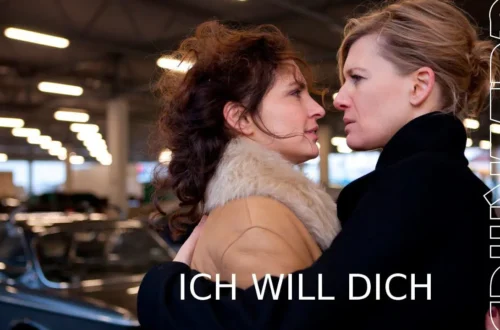
Ich will dich (2014): An Interpretation of Forbidden Desire Collapsing a Solidified Daily Life

Review of Manok (Iban-ri Jang Man-ok): The Subversive Occupation of a Middle-Aged Queer Woman Breaking Isolated Boundaries