[WIR] An Existential Portrait of Women in Their 30s Wandering Between the Constraints of Love and the Pursuit of Freedom
To share a life with another is, in essence, the act of surrendering a portion of one’s own territory. The thirties are a period of intense internal struggle, caught between social achievement, personal desire, and the drive for a stable union with another.
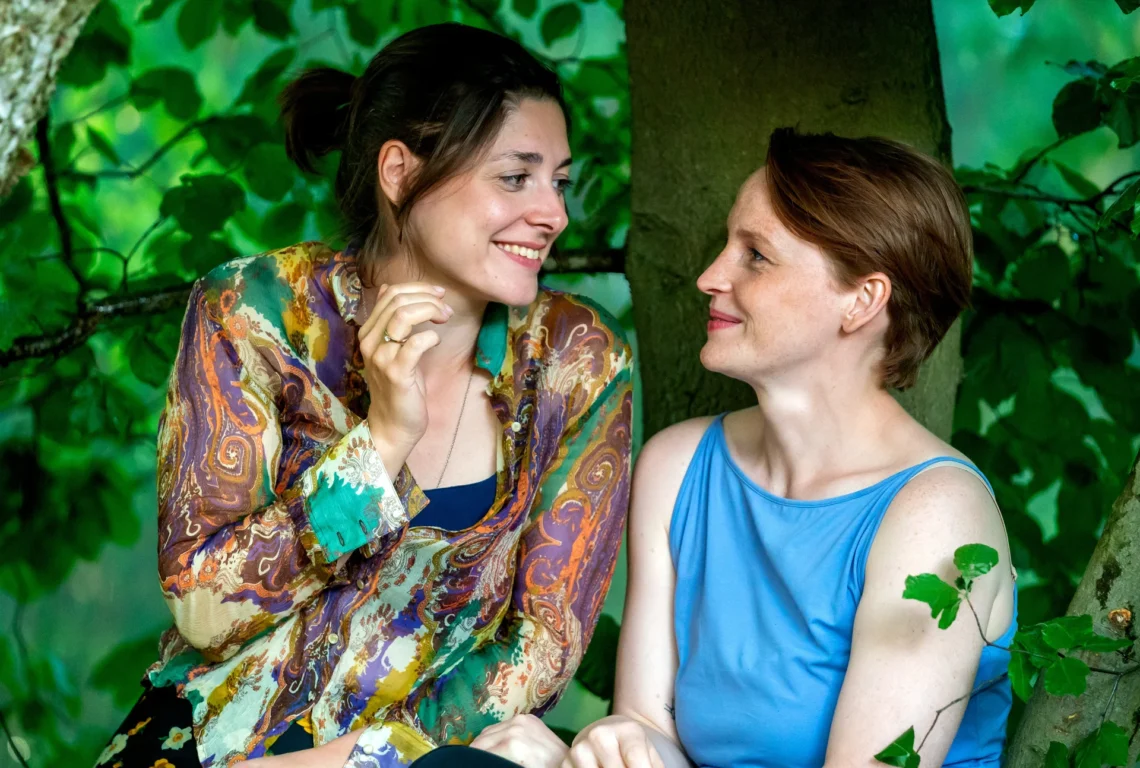
The German drama WIR delves with agonizing precision into the solitude and longing of the ‘I’ trapped within the framework of ‘we,’ through the lives of two women, Helena and Annika, standing in the midst of this life stage.
📋 작품 정보 (Overview)
| Item | Details |
| Title | WIR (2021–2023) |
| Director | Luzia Schmid, Ester Amrami, et al. |
| Cast | Katharina Nesytowa (as Helena), Eva Maria Jost (as Annika) |
| Year/Country | 2021–2023 / 🇩🇪 Germany |
🎨 Conflict Between Inner Disorder and External Order: The Interpretative Confrontation of Helena and Annika
For Helena, who possesses an artistic temperament, life is akin to an undefined canvas. She prioritizes the clarity of her identity over the stability of a relationship, feeling a sense of dread that her own colors might be diluted within the comfort of an institutional union.
Conversely, Annika wishes to design a future upon the solid ground of reality. For her, love is synonymous with responsibility—a narrative completed through tangible promises and the fruition of ‘children.’ The core of any WIR interpretation lies at this very juncture: the fundamental temporal discord between the one who seeks to expand and the one who seeks to settle.
💭 The conflict between the two is not merely a difference in personality, but a tragic symptom showing that the philosophical pillars supporting their lives are facing opposite directions.
⚡ Suffocation in the Name of Devotion: Psychological Tension Surrounding Marriage and the Ending
The marriage and stability proposed by Annika loom before Helena like a vast cemetery. Despite her love, Helena’s silence—her inability to accept her partner’s demands—sharply thins the density of the relationship, projecting the universal ennui experienced by couples in their thirties.
Was the ‘open relationship’ they chose a ventilator to save the bond, or a painful experiment to postpone the inevitable catastrophe? The cracks revealed as they move toward the WIR ending suggest that queer relationships can also collapse along the same trajectory of boredom found in heteronormative conventions.
💔 The realization that complete union with another is impossible comes as a sense of loss for Annika and a cruel sense of liberation for Helena, leaving a chilling impression on the reader’s heart.
🏳️🌈 Solitude and Survival of the Modern Woman: The Zenith of Realism in Queer Narratives
WIR does not idealize or romanticize relationships between women. Instead, it overlays a sociological layer of struggle for survival and the preservation of identity. Helena’s relational orientation constantly extends outward to prove the ‘self,’ while in that process, Annika experiences the hollowing out of their connection.
This drama is exceptional because it does not locate a woman’s solitude in the absence of a partner, but in the ‘isolation of the self’ that cannot be protected even when a partner is present. This directly resonates with the fragmentation modern women face between their social roles and existential reality.
✨ Ultimately, their narrative is not a record of achieving love, but a chronicle of the excruciating growing pains each had to endure to stand as a whole individual.
🖋️ Violet Screen’s Critical Perspective: Finding Oneself Within the Maze of ‘Us’
WIR revolts against the classical premise that ‘to love is naturally to sacrifice.’ The delicate emotional waves portrayed by Katharina Nesytowa and Eva Maria Jost paradoxically argue that the end of a relationship is not necessarily a failure, but can be a process of purification for a new beginning.
Have you ever experienced surrendering a core part of your identity for a future with a partner? Or have you ever wondered about choosing the unstable freedom of ‘I’ over the stability of ‘we’? Please share your honest stories in the comments.
🎬 Curation: Other Perspectives into the Depths of Relationships
- [Jang Ok-jung, Living by Love]: The fierce relational politics of women who transparently revealed their desires even under the oppression of the era.
- [Killing Eve]: An extreme chronicle of solidarity between two women who discover their true essences through each other amidst a destructive attraction.


You May Also Like
Supergirl (2015–2021): The Gravity of Solidarity Orbiting the Planet of Self
Sky Rojo: Wendy and Greta, Blossoming in a Shattered World—A Desperate Indulgence Called Salvation